Cable tray corrosion protection is an important consideration for electrical installations across Saudi Arabia. Industrial facilities, commercial buildings, infrastructure projects and outdoor installations can expose cable management systems to moisture, airborne salts, chemicals, dust and changing environmental conditions.
When a cable tray's protective coating deteriorates, the underlying material may become vulnerable to corrosion. Over time, this can affect the condition of the tray, its connections, supporting components and overall installation reliability.
For electrical engineers, contractors, consultants and procurement teams, selecting the correct corrosion protection system requires more than choosing a galvanized or coated product. The material, coating process, environmental exposure, fabrication method and maintenance requirements must all be considered. This guide explains the main causes of cable tray corrosion, available protection methods and important selection factors for projects in Saudi Arabia.
Why Cable Tray Corrosion Protection Matters
Cable trays provide mechanical support and organized routing for electrical, control and communication cables. Their structural condition is important because they must continue supporting the intended cable load throughout their service life.
Corrosion can gradually reduce the thickness of metal components, weaken connections and damage protective finishes. The extent of deterioration depends on the material, coating quality and surrounding environment.
In demanding locations, corrosion may also affect brackets, fasteners, couplers and other accessories. Protecting only the straight tray sections while overlooking the supporting components can leave weaknesses in the complete system.
A suitable corrosion protection strategy helps reduce deterioration and supports long term maintenance planning. However, no coating makes a product immune to every environmental condition. Protection must be matched to the actual exposure.
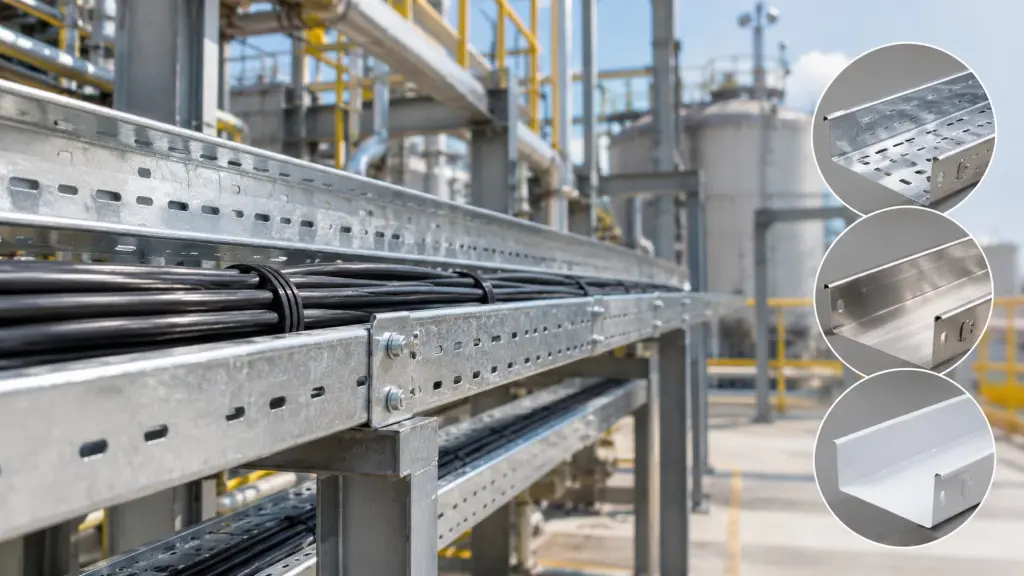
Common Causes of Cable Tray Corrosion
Understanding the environment is the first step in selecting an appropriate protective system.
Moisture and Humidity
Water and moisture can contribute to corrosion, particularly where protective coatings are damaged or metal surfaces remain exposed. Indoor locations with condensation, washdown areas and outdoor installations may require additional consideration.
Coastal and Marine Exposure
Locations near the Red Sea and Arabian Gulf can experience airborne salts and moisture. Chlorides can accelerate corrosion of many metallic materials and may create demanding conditions for galvanized steel and certain stainless steel grades.
Projects in coastal areas such as Jeddah and Dammam should therefore assess the actual exposure level when specifying cable tray materials and finishes.
Industrial Chemicals
Some industrial facilities expose cable management systems to chemical vapours, process residues and cleaning agents. The effect depends on the specific chemical, its concentration, temperature and exposure duration.
A coating suitable for a general industrial environment may not be suitable for a chemical processing area. The project specification should identify the relevant substances before material selection.
Mechanical Damage
Handling, cutting, drilling, welding and installation activities can damage protective coatings. Scratches and exposed edges may become vulnerable to corrosion, especially in aggressive environments.
Fabrication and repair procedures should therefore follow the manufacturer's approved guidance and the requirements of the specified coating system.
Cable Tray Materials and Corrosion Resistance
The base material has a significant influence on the corrosion protection strategy.
Galvanized Steel Cable Trays
Galvanized steel combines the structural properties of steel with a protective zinc coating. Zinc provides barrier protection and can offer sacrificial protection to exposed steel under suitable conditions.
The performance depends on the coating thickness, continuity, manufacturing process and environmental exposure.
Hot dip galvanized products and pre galvanized products should not automatically be considered equivalent. Their coating processes and coverage characteristics can differ, particularly around fabricated edges, holes and connections.
For industrial and outdoor projects, confirm the required galvanizing specification and whether the coating is applied before or after fabrication.
Stainless Steel Cable Trays
Stainless steel may be suitable for installations requiring greater corrosion resistance than conventional coated steel can provide.
However, stainless steel performance varies by grade. Exposure to chlorides, chemicals and certain cleaning agents can cause localized corrosion, including pitting and crevice corrosion.
The grade should be selected according to the environment and project requirements. Fasteners and connecting components must also be compatible with the selected material.
Aluminum Cable Trays
Aluminum naturally forms a thin oxide layer that helps protect its surface. It is relatively lightweight and may be suitable for applications where reduced structural weight is beneficial.
However, aluminum can be affected by certain chemicals and may experience galvanic corrosion when connected to dissimilar metals under suitable environmental conditions.
The alloy, surface condition, connection details and installation environment should all be considered before selection.
Common Corrosion Protection Methods for Cable Trays
Different protective systems are available for metal cable trays. The correct method depends on the base material, fabrication process and required service environment.
Hot Dip Galvanizing
Hot dip galvanizing involves immersing fabricated steel components in molten zinc to produce a protective metallic coating.
It is commonly considered for outdoor and industrial steel applications where corrosion protection is required. The coating can protect the underlying steel through a combination of barrier and sacrificial action.
For project procurement, confirm the applicable galvanizing standard, coating requirements, fabrication condition and inspection documentation.
Pre Galvanizing
Pre galvanized steel receives its zinc coating before the material is formed into the finished tray component.
This process may be suitable for applications where the specified coating provides adequate protection. However, cutting, drilling and forming can affect coating continuity at certain locations.
The suitability of pre galvanized material should be assessed against the project exposure conditions and manufacturer's documentation.
Powder Coating
Powder coating provides an additional protective finish and can also meet specific appearance requirements. Its performance depends on surface preparation, coating formulation, application quality and the operating environment. Damaged areas may require approved repair procedures.
Powder coating should not automatically be treated as a replacement for hot dip galvanizing. The two systems have different characteristics and must be evaluated against the project specification.
Protective Coatings for Specialized Environments
Some industrial applications may require specialized coating systems designed for particular chemical or environmental exposures. These systems should be selected using documented compatibility information and relevant technical data. A coating recommendation should account for temperature, chemical concentration, exposure duration and expected maintenance conditions.
Selecting Cable Tray Corrosion Protection for Saudi Arabia
Saudi Arabia has different environmental conditions across inland, coastal and industrial locations. The correct protection system should reflect the actual site conditions rather than relying on a general regional assumption. For inland commercial installations, a suitable galvanized or coated steel system may meet the project's requirements, depending on moisture exposure and building conditions.
For coastal projects around Jeddah, Dammam and other shoreline locations, airborne salts and moisture may require more demanding corrosion protection. Material grade, coating specification, connection details and inspection planning become particularly important.
Industrial facilities may involve chemical exposure, process moisture or frequent cleaning. In these situations, the designer should identify the specific exposure and select a compatible material and coating system. Outdoor installations should also consider sunlight, temperature changes, rain, windblown dust and potential coating damage during maintenance.
There is no universally suitable corrosion protection system for every project. The final selection should follow the approved drawings, technical specifications and manufacturer's recommendations.
Protecting Cable Tray Connections and Accessories
Corrosion protection should cover the complete cable tray installation, not just the main tray sections. Couplers, bolts, nuts, washers, brackets, support frames and bonding components can all be exposed to environmental conditions. If these components have inadequate protection or incompatible materials, localized corrosion may develop.
Connections between dissimilar metals require particular attention. In the presence of moisture, galvanic corrosion may occur depending on the materials and connection conditions.
Where protective coatings are damaged during fabrication or installation, repairs should follow an approved procedure compatible with the original protection system. Project teams should also verify that the selected protective finish does not interfere with electrical bonding connections or other functional requirements.
How to Evaluate Cable Tray Corrosion Protection Before Procurement
Procurement teams should request more than a general description such as galvanized steel or corrosion resistant coating. The technical specification should identify the base material, required protective finish, applicable standard and relevant coating requirements. Where necessary, request coating inspection records, material certificates and product documentation.
Also confirm the installation environment, tray dimensions, load requirements, accessories and expected maintenance conditions.
For projects with demanding corrosion exposure, the responsible engineer should review the proposed material and protection system before approving the technical submission. Comparing suppliers on the basis of equivalent specifications helps prevent purchasing products that appear similar but offer different levels of protection.
Inspection and Maintenance of Cable Tray Systems
Even a correctly specified corrosion protection system requires suitable inspection and maintenance. Inspection teams should look for coating damage, rust formation, corrosion around connections, loose fasteners and deterioration of support components. Particular attention should be given to joints, exposed edges and locations where water or contaminants may accumulate.
If corrosion is identified, its extent should be assessed before selecting a repair or replacement method. Surface preparation and coating repair must follow the approved product instructions.
Maintenance frequency should reflect the environmental exposure, operating conditions and project maintenance plan. Coastal and industrial installations may require more frequent attention than protected indoor systems.
Choosing the Right Corrosion Protection for Your Project
The correct cable tray corrosion protection system depends on the base material, coating method, installation environment and expected service conditions. Galvanized steel, stainless steel, aluminum and specialized protective coatings each have applications where they may be appropriate.
For projects in Saudi Arabia, engineers and procurement teams should evaluate environmental exposure and technical specifications before selecting a product. A properly matched protection system can help reduce maintenance challenges and support the long term condition of the cable management installation.
Hitech Fence supports customers exploring cable management and industrial solutions in Saudi Arabia. When evaluating cable tray options, compare the material, finish, dimensions, load rating and supporting accessories against the approved project requirements.
For a project specific enquiry, provide the installation location, environmental conditions, required tray configuration, material and protective finish. These details help establish the appropriate product requirements for technical review and quotation.
Frequently Asked Questions
There is no single best material for every environment. Stainless steel, galvanized steel and aluminum have different corrosion characteristics. The correct option depends on exposure conditions, material grade and project requirements.
It can be suitable for many outdoor applications when the galvanizing specification and coating quality match the environmental exposure. Coastal and highly corrosive locations may require additional assessment.
Pre galvanized steel receives its zinc coating before fabrication, while hot dip galvanizing is generally applied to fabricated steel components. The resulting coverage and suitability can differ, so confirm the required process in the project specification.
Powder coating can provide a protective barrier when correctly applied and maintained. Its effectiveness depends on surface preparation, coating quality and environmental exposure. It should not automatically be considered equivalent to galvanizing.
Use compatible connectors and fasteners, follow the manufacturer's connection instructions and maintain the required protective finish. Damaged coatings should be repaired using an approved procedure.