Skip to Content

Manual Sliding Gates in Saudi Arabia

Industrial Steel Sliding Gates

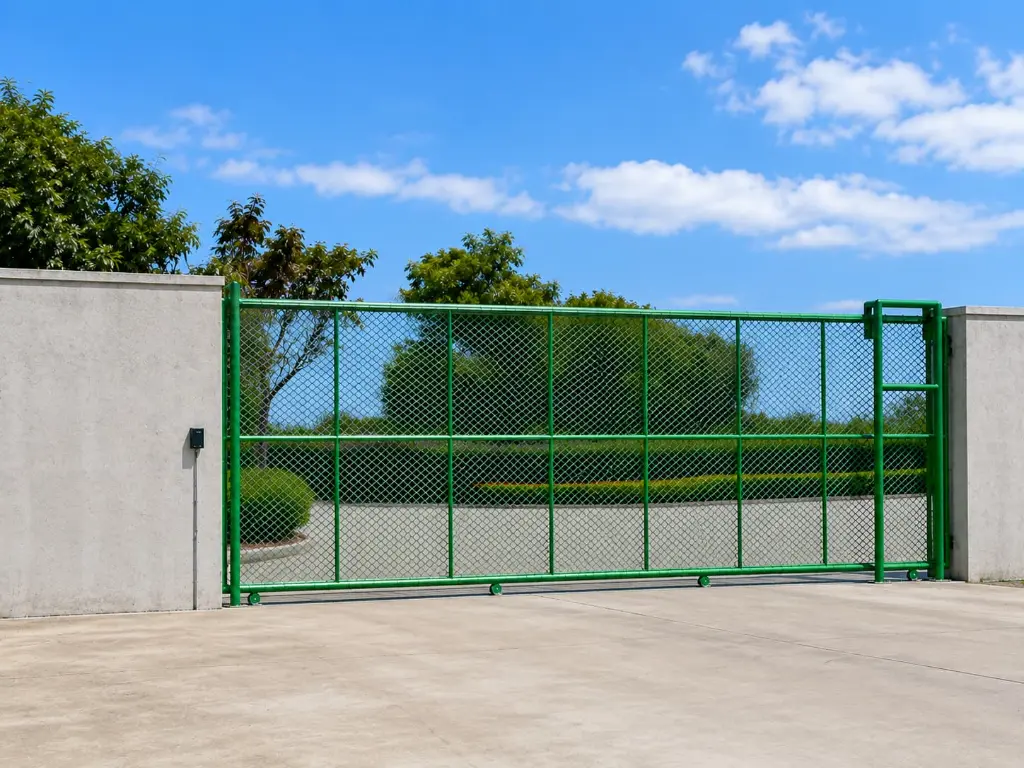
Custom-built manual sliding gates for industrial facilities, warehouses, logistics yards, and secure perimeter entrances across Saudi Arabia. Not every industrial entrance has enough room for a conventional swing gate. At warehouses, manufacturing plants, and logistics facilities, a gate that opens inward or outward can interfere with vehicle movement or take up valuable working space.

Hitech Fence provides manual sliding gates in Saudi Arabia designed to move horizontally along the perimeter fence. Built with fabricated steel frames, track-supported wheels, and guide rollers, these gates offer a practical solution for controlling vehicle access without requiring an electrical supply.

sliding gate in ksa

What Is a Manual Sliding Gate?

A manual sliding gate is a steel access gate that opens and closes by moving sideways along a fixed track. Unlike a swing gate, which needs space to rotate, a sliding gate travels parallel to the boundary fence.

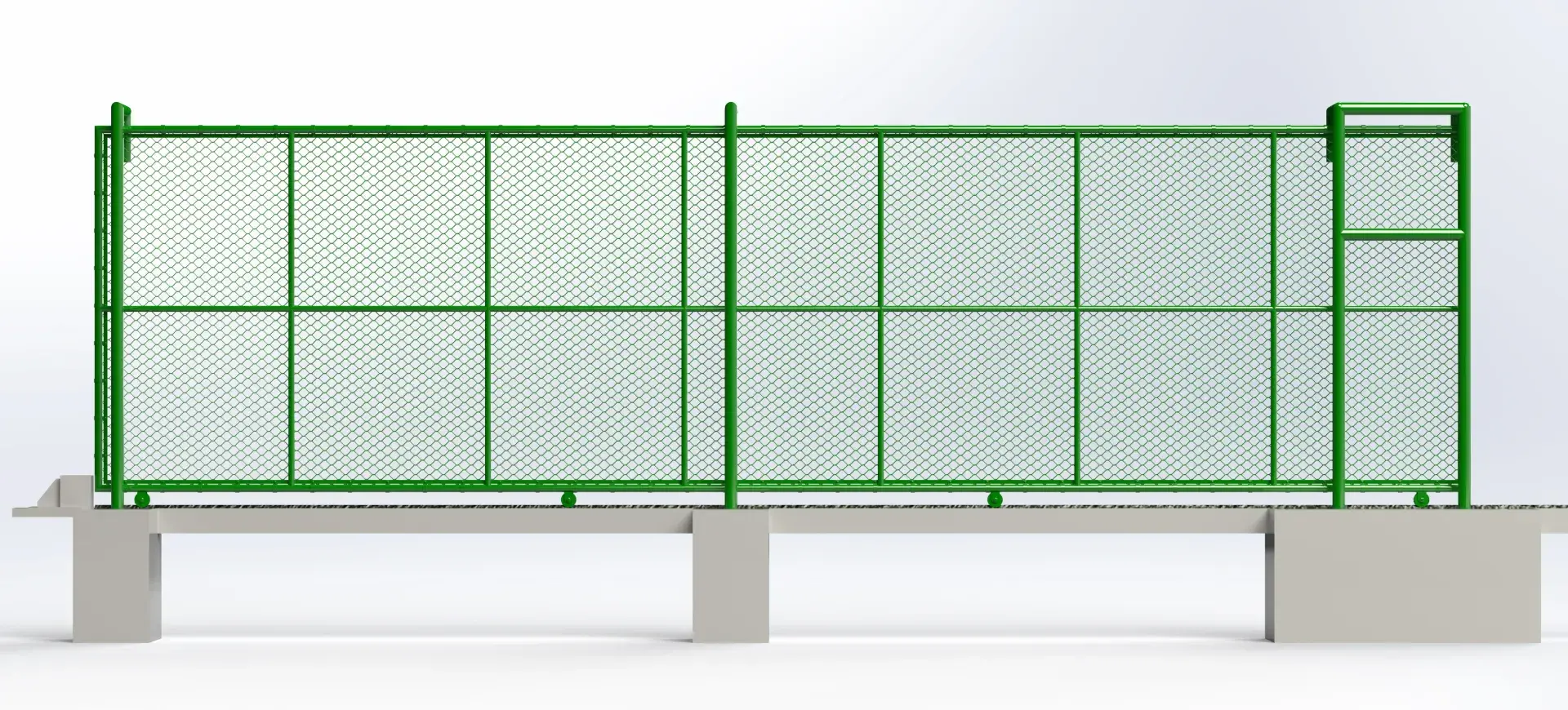
The gate leaf is supported by wheels installed beneath its frame. These wheels run along a steel track, while guide rollers attached to supporting posts help keep the gate upright and aligned during movement. The operator opens and closes the gate by hand using a suitable handle. A locking arrangement secures the gate when closed, and a stopper limits movement at the fully open position.

Gate Structure & Components

Main Components of a Manual Sliding Gate

A reliable sliding gate depends on more than a strong steel frame. Each component contributes to the gate's movement, alignment, and structural stability.

  1. Steel Gate Frame

    The fabricated steel frame forms the main body of the gate and supports the selected mesh or infill.

    Circular hollow steel sections are commonly used, with their dimensions selected according to the required opening, height, and structural loading.

  2. Internal Structural Bracing

    Bracing helps control frame distortion and improves stiffness, particularly for longer gate leaves. The bracing arrangement is determined by the gate geometry and approved structural design.

  3. Supporting Wheels and Steel Track

    Supporting wheels carry the gate load and allow it to move along a fixed steel track. The track must provide a straight, level, and continuously supported running surface. Wheel quantity and capacity are selected according to the gate's actual weight and travel requirements.

  4. Guide Posts and Rollers

    Guide posts support the roller assemblies that maintain the gate's vertical alignment and restrain sideways movement. Correct positioning of these components is important for smooth operation throughout the gate's travel.

  5. Mesh or Infill

    The infill is selected according to the surrounding perimeter fence and project requirements. Chain link mesh can be used where compatibility with an existing chain link fencing system is required. Wire diameter, mesh opening, and attachment details are confirmed during technical review.

  6. Gate Stopper and Locking Arrangement

    The stopper limits gate travel at the fully open position. A pull handle and suitable locking arrangement allow personnel to operate and secure the gate. Open-position restraint arrangements may also be incorporated where required by the approved design.

Technical Data & Configuration

Manual Sliding Gate Technical Specifications

Hitech manual sliding gates are manufactured to project-specific requirements. The following values represent typical configurations and reviewed technical references rather than fixed dimensions for every project.

Parameter Typical Technical Specification
Gate type Track-supported, single-leaf manual sliding gate
Clear opening Commonly approximately 2,000–10,000 mm
Heavy-duty reference One reviewed configuration extends to 11,000 mm
Gate height Project-specific; 3,000 mm nominal in one reference
Main frame Steel circular hollow section, typically Ø60 × 3 mm where suitable
Internal bracing Steel circular hollow section, typically Ø48 × 3 mm where suitable
Guide posts Project-specific; one reference uses Ø114 × 3 mm
Mesh / infill Selected according to perimeter fencing and project requirements
Running track Steel track selected according to gate design
Supporting wheels Quantity and load capacity based on gate weight and dimensions
Guide system Guide posts with aligned roller assemblies
Gate stopper According to gate travel arrangement
Handle / locking According to project requirements
Protective finish Galvanized, coated, or project-specified finish
Operation Manual, without electrical power
Application Industrial, commercial, logistics, utility, and infrastructure entrances

Engineering note: These dimensions are reference values, not universal product limits. Final material sections, wheel capacity, track design, and structural requirements must be verified against approved drawings, actual loading, wind conditions, travel length, track support, and foundation capacity.

Industrial Gate Solutions

Why Choose Manual Sliding Gates for Industrial Facilities?

01 ENTRANCE SPACE

Make Better Use of Available Entrance Space

A manual sliding gate moves along the fence line rather than swinging into the vehicle approach. This is particularly useful at warehouses, loading areas, and industrial compounds where trucks, forklifts, or service vehicles need clear access through the entrance. The site must still have enough unobstructed space beside the opening for the gate to slide fully open.
02 Entrance Dimensions

Suitable for Wide Industrial Entrances

Industrial sites often need larger gate openings to accommodate delivery trucks, machinery, and maintenance vehicles. Hitech manual sliding gates are configured according to the required clear opening, gate height, and operating conditions.

Typical project openings are approximately 2 to 10 metres, while one reviewed heavy-duty reference configuration extends to 11 metres. Larger or nonstandard configurations require engineering review.

03 Manual Operation

Manual Operation Without Electrical Power

Manual sliding gates do not require a motor, electrical connection, or automated control equipment. This makes them a practical option for controlled-access locations where gates are opened by authorized personnel and powered operation is not required. The operating effort depends on the actual gate weight, wheel selection, track condition, and alignment.

04 Fencing Integration

Designed to Match Perimeter Fencing

An industrial gate should work as part of the overall fencing system, not as a separate element. Hitech can coordinate the gate height, steel frame, mesh infill, finish, and connection details with the surrounding chain-link or other approved perimeter fencing.

05 Structural Configuration

Configurable Steel Construction

The gate frame and internal bracing are selected to provide suitable structural stiffness for the required opening. Guide posts, wheels, track sections, and accessories are determined according to gate geometry, weight, wind exposure, and project specifications.

Industrial & Commercial Applications

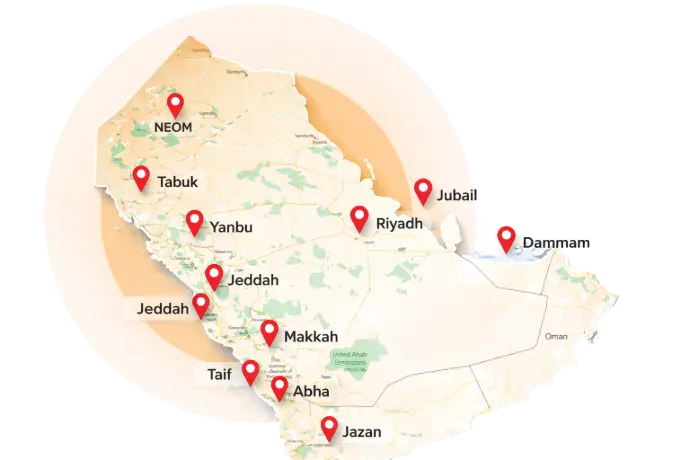
Where Are Manual Sliding Gates Used in Saudi Arabia?

Warehouses and Logistics Yards

Warehouses often need wide vehicle entrances without reducing space available for loading, unloading, or internal traffic. A sliding gate can help maintain a clear vehicle approach while opening alongside the boundary fence.

Manufacturing Plants and Industrial Facilities

Industrial facilities may require controlled access for employees, service vehicles, maintenance equipment, and deliveries. A fabricated steel sliding gate can be configured to match the facility's perimeter fencing and access requirements.

Utility Facilities and Substations

Utility compounds and substations often require defined access points for authorized personnel and maintenance vehicles. Gate dimensions, fencing integration, and locking arrangements can be coordinated with the applicable project specification.

Construction and Infrastructure Projects

Construction and infrastructure sites may need wide openings for equipment and material deliveries. Manual sliding gates can be considered where the ground conditions, track support, and available side space are suitable.

Commercial and Government Compounds

Commercial facilities, parking areas, and controlled-access compounds can use manual sliding gates where a practical, manually operated entrance is appropriate.

Oil and Gas Facilities

Manual sliding gates may be considered for oil and gas facilities where permitted by the project specification. Security classification, access-control requirements, and any applicable client approvals must be reviewed before selecting the final gate configuration.

Site Preparation & Installation

Manual Sliding Gate Installation Requirements

Correct installation is essential for smooth gate movement and alignment. Before installation, the project team should confirm the clear opening, gate height, travel direction, available runback space, and connection to the surrounding fence.

01

Site Verification

Step 01

Measurements & Drawings

Confirming site measurements and approved technical drawings.

Step 02

Site Conditions

Reviewing ground levels, slope, drainage, and the gate travel path.

02

Track & Foundation Preparation

Step 03

Foundation Preparation

Preparing the approved track support and guide-post foundations.

Step 04

Steel Track Installation

Installing the steel track straight, level, and continuously supported.

03

Gate Assembly & Alignment

Step 05

Guide Posts & Rollers

Positioning and aligning the guide posts and roller assemblies.

Step 06

Gate Leaf & Wheels

Installing the gate leaf, supporting wheels, and stopper.

04

Accessories & Operational Checks

Step 07

Locking & Accessories

Fitting the handle, locking arrangement, and required accessories.

Step 08

Alignment & Travel Check

Checking gate alignment and manually operating the gate through its full travel.

Scope clarification: Excavation, concrete, reinforcement, foundations, and installation are included only when specifically stated in the approved quotation or contract.

Project-Specific Configuration

Custom Manual Sliding Gates for Your Project

Industrial entrances are not all the same. A logistics yard may require a wide opening for heavy vehicles, while a utility compound may prioritize integration with its existing fence and locking system. Hitech Fence offers project-based configuration options, including:

09 Configuration Options

Gate Dimensions & Movement

  • Required clear opening and gate height.
  • Gate travel direction and available runback.

Structural Components

  • Steel frame and internal bracing sections.
  • Guide-post dimensions and roller arrangement.

Mesh & Protective Finish

  • Chain-link or other approved mesh infill.
  • Wire diameter and mesh opening where applicable.
  • Galvanized or project-specified protective finish.

Access & Fence Integration

  • Handle, locking, stopper, and open-hold arrangements.
  • Connection to new or existing perimeter fencing.

Final configurations are reviewed against the approved design, site conditions, and project requirements.

Downloads


Technical Quality References

Applicable Standards and Technical References

Depending on the approved project specification, the following standards may be relevant to materials, fabrication, coatings, or installation.

Standard Relevant Application
ASTM A53
Steel pipe and posts where specified
ASTM A123
Hot-dip galvanizing of fabricated steel products
ASTM A153
Galvanizing of applicable hardware
ASTM A780
Repair of galvanized coatings
ASTM F567
Chain-link fence installation practices where applicable
AWS D1.1
Structural welding where applicable
ISO 1461
Hot-dip galvanized coatings on fabricated iron and steel articles

Technical reference note: These standards are provided as potential technical references and do not imply that every standard applies to every gate configuration. Applicable standards, editions, testing requirements, and acceptance criteria must be confirmed against the approved project specifications and drawings.