Cable tray routing and cable segregation are important parts of electrical system design. A well planned cable route helps organise power, control, instrumentation and communication cables while supporting safe installation, maintenance and future expansion.
In Saudi Arabia, cable routing decisions must account for project specifications, electrical requirements, building layouts and operating conditions. Industrial facilities, commercial developments, utility installations and infrastructure projects may have different requirements for cable separation, access and protection.
This guide explains how cable tray routes are planned, why cable segregation matters and what engineers and contractors should consider when designing cable management systems for Saudi projects.
What Is Cable Tray Routing?
Cable tray routing is the process of planning the path through which cable trays carry electrical and communication cables across a facility.
The route may extend horizontally along walls, ceilings, structural frameworks or dedicated service corridors. It may also include vertical sections, bends, tees, reducers and other fittings to connect different areas.
A properly planned route should provide sufficient space for the intended cables, allow practical installation and maintenance, and avoid unnecessary interference with other building services.
Routing decisions should be made during the design stage wherever possible. Changes made after installation can increase project costs, complicate coordination and create additional work for electrical contractors.
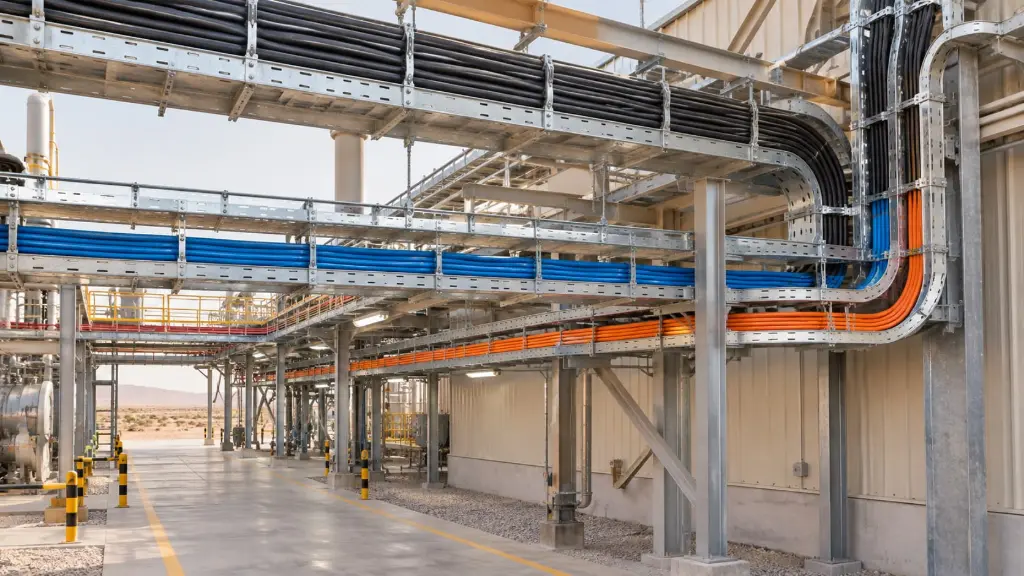
What Is Cable Segregation?
Cable segregation means separating different categories of cables according to their electrical characteristics, function and susceptibility to interference. For example, power cables and sensitive instrumentation cables may require separation to reduce the risk of electromagnetic interference affecting signal performance. Common cable categories include:
Power cables: Used to distribute electrical energy to motors, machinery, distribution boards and other equipment.
Control cables: Carry signals used to control industrial equipment, automation systems and electrical operations.
Instrumentation cables: Transmit measurement and process signals between instruments, control panels and monitoring systems.
Communication cables: Support data transmission, networking and communication infrastructure.
The required separation depends on cable characteristics, voltage levels, shielding, installation conditions and the applicable project standards. Not every installation requires the same arrangement.
Why Cable Segregation Matters in Industrial Projects
Industrial facilities often contain multiple electrical and control systems operating in close proximity. Routing all cables together without considering their functions can create technical and maintenance challenges. One important consideration is electromagnetic interference. Certain power cables can generate electromagnetic fields that affect nearby sensitive signal cables. Appropriate separation, shielding and routing practices can help reduce this risk.
Segregation also improves cable identification and maintenance. When cables are organised by function, technicians can trace routes more easily and identify the relevant circuits during inspection or modification. A planned arrangement can also support future expansion. Dedicated routes or reserved tray capacity may make it easier to add cables without disrupting existing installations.
Common Cable Tray Routing Arrangements
The most suitable arrangement depends on the facility layout, cable types, available space and engineering requirements.
1. Separate Cable Trays
Using separate trays for different cable categories is one approach to cable segregation. For example, a project may specify dedicated trays for power cables and sensitive instrumentation cables. This arrangement can simplify cable identification and provide a clear separation between systems.
However, tray separation must follow the applicable engineering requirements. The distance between routes and any additional protective measures should be established by the project design.
2. Segregated Compartments
Some cable management arrangements use dividers or internal barriers to separate cable categories within a shared tray system. This approach may help organise cables where space is limited, provided the selected tray system and divider configuration are suitable for the application.
The use of dividers should not be assumed to replace required separation distances or other protection measures. Their suitability must be confirmed against the relevant project requirements.
3. Dedicatesd Routes for Sensitive Cables
Instrumentation, control and communication cables may require dedicated routes depending on their susceptibility to interference and the design of the electrical system. Keeping sensitive signal cables away from sources of electrical noise can improve installation organisation and support reliable system operation. The routing design should consider cable shielding, grounding arrangements, parallel runs and crossings with power cables.
Important Factors in Cable Tray Routing Design
A reliable routing plan considers more than the shortest path between two points.
Cable Type and Electrical Characteristics
Engineers should identify the voltage level, current, shielding, signal type and operating function of the cables before deciding how to route them. Power, control and instrumentation cables may have different separation requirements. The applicable project standards and equipment manufacturer's recommendations should guide the arrangement.
Cable Loading and Tray Capacity
The selected tray must accommodate the planned cable quantity and arrangement. Engineers should consider the total cable load, tray dimensions, fill requirements and space for future expansion where specified.
Overcrowding can make installation difficult, restrict access and create problems during maintenance. Cable fill and loading should therefore be evaluated during design rather than left entirely to the installation stage.
Routing Around Other Services
Cable trays often share building spaces with HVAC ducts, pipes, lighting systems and other electrical infrastructure. Coordination with other disciplines helps avoid physical conflicts and maintains access to equipment, valves, inspection points and maintenance areas.
Bends, Elevations and Junctions
Changes in direction and elevation require suitable fittings and careful planning. Bends, tees and vertical transitions should accommodate cable installation requirements without creating excessive mechanical stress. Cable manufacturers may specify minimum bending radii for different cable types. These requirements should be considered when selecting tray fittings and planning routes.
Accessibility and Future Maintenance
Cable routes should allow technicians to inspect trays, identify cables and carry out maintenance safely. Where practical, avoid routing arrangements that block access to equipment or make cable replacement unnecessarily difficult. Consider future cable additions during the design stage, particularly in facilities expected to expand.
Cable Routing Considerations for Saudi Arabia
Saudi projects may involve demanding environmental and operational conditions. Outdoor cable routes, coastal facilities and industrial sites require careful consideration of the installation environment.
High ambient temperatures can influence cable selection and current carrying capacity. Engineers should use the applicable cable ratings and installation derating factors rather than assuming that a cable will perform identically in every environment.
Coastal and industrial locations may also expose cable trays and their accessories to moisture, airborne salts or corrosive substances. Material and coating selection should reflect the actual exposure conditions. For outdoor installations, the design should also consider weather exposure, structural supports, drainage and access for inspection.
In large industrial and infrastructure projects, coordination with electrical, instrumentation, mechanical and civil teams is particularly important. The final route should reflect the approved drawings and relevant client requirements.
Common Cable Routing and Segregation Mistakes
One common mistake is grouping cables according to convenience without checking their electrical characteristics. This can create interference risks and make later troubleshooting more difficult.
Another issue is assuming that placing different cable categories in separate trays automatically satisfies every separation requirement. The necessary distances and protective arrangements depend on the applicable standard and project specification.
Poor coordination with other services can also lead to congested routes, inaccessible supports and installation conflicts. Insufficient allowance for future expansion may result in additional trays being installed later, increasing cost and disrupting existing systems. Finally, cable routing should not be finalised without reviewing tray loading, support arrangements, bending requirements and environmental conditions.
What Should Be Included in a Cable Tray Routing Specification?
A useful cable tray routing specification should identify the cable categories, tray types, material and finish, route locations and relevant installation requirements. It should also define the required separation arrangements, tray dimensions, loading criteria, support details and approved accessories.
For complex projects, routing drawings should clearly show horizontal and vertical paths, changes in direction, equipment connections and coordination with other services.
Where specific IEC, NEMA or client standards are referenced, the applicable editions and project requirements should be identified. Contractors and suppliers should review these documents before finalising technical proposals.
Plan Reliable Cable Management for Your Saudi Project
Effective cable tray routing and segregation help create organised electrical installations that are easier to inspect, maintain and expand. The right arrangement depends on cable characteristics, electrical requirements, environmental exposure and coordination with other building services.
Hitech Fence supports cable management requirements for industrial and infrastructure applications in Saudi Arabia. Share your cable tray requirements, routing drawings, cable categories and project specifications with the team to discuss suitable product options.
Frequently Asked Questions